
Warm winter jacket for men – choosing insulation, length and layers
Published: date by: author
A GUIDE FOR COLD DAYS
A warm winter jacket for men needs insulation that retains heat, a shell that slows the wind and enough room for the right layers. Length, hood and activity level then determine which style works best for you.
Short answer: do not choose solely by how thick a jacket looks. Start with how long you normally stay outside and how active you are. For slow walks and waiting outdoors, a longer insulated style often gives more protection. At higher activity levels, mobility and temperature control matter more. Browse Dunken's men's winter jackets while comparing the features below.
What makes a winter jacket warm?
Warmth comes from air held still inside the insulation, but the whole construction determines how the jacket feels outdoors. Insulation loses much of its benefit if cold wind enters at the neck, cuffs or hem. Consider insulation, wind protection, length, fit and moisture management together.
- Insulation: down, synthetic fill and teddy or pile linings trap air in different ways.
- Wind protection: a dense shell, storm flap and adjustable openings reduce heat loss.
- Length: covering the seat and thighs protects more of the body.
- Fit: room for a mid-layer works better than an overly tight jacket.
- Moisture: trapped sweat can make you cold after activity.
Which men's winter jacket is the warmest?
No single style is warmest in every situation. A long, heavily lined parka often provides substantial protection while standing still. A lighter puffer can offer high insulation for its weight. A lined everyday jacket may work better when moving between a car, public transport and heated buildings. The right choice keeps wind and cold out without making you overheat during your usual activity.
| Style | Strength | Best when |
|---|---|---|
| Long parka | Covers more and often includes a hood and adjustments | You walk slowly or wait outside |
| Puffer | High insulating volume for the weight | Low weight is a priority |
| Lined everyday jacket | Easy to wear between outdoors and indoors | Your day includes transport, work and errands |
How much insulation do you need?
Base the choice on your coldest normal use, not a rare extreme. A brisk walk generates more body heat than waiting on a platform. Low activity calls for more insulation and wind protection, normal daily movement needs balance, and high activity makes ventilation and effective layering especially important. Manufacturer temperature ratings are only guidance because wind, moisture, individual differences and clothing underneath all have a major effect.
Warm, water-repellent and waterproof are not the same
A lining mainly describes insulation. A water-repellent shell can resist light precipitation for a while, while waterproof performance requires suitable materials and construction. Never assume that a warm jacket is automatically rainproof.
How should a winter jacket fit over layers?
Measure or try it with the mid-layer you actually plan to wear. Your shoulders should move freely, sleeves should cover the wrists when your arms reach forward and the jacket should close without compressing the insulation. A men's hoodie or sweatshirt is a realistic mid-layer when checking the size.
- Measure a jacket you already find comfortable.
- Compare garment measurements rather than relying only on the size letter.
- Leave movement room at the shoulders and elbows.
- Check the hood and collar with your normal layers.
Should you choose a long or short winter jacket?
A longer style protects more of the hips and thighs and often suits lower activity. A shorter jacket gives more freedom of movement and is convenient in a car. Compare more men's jackets if you are unsure which length fits your routine.
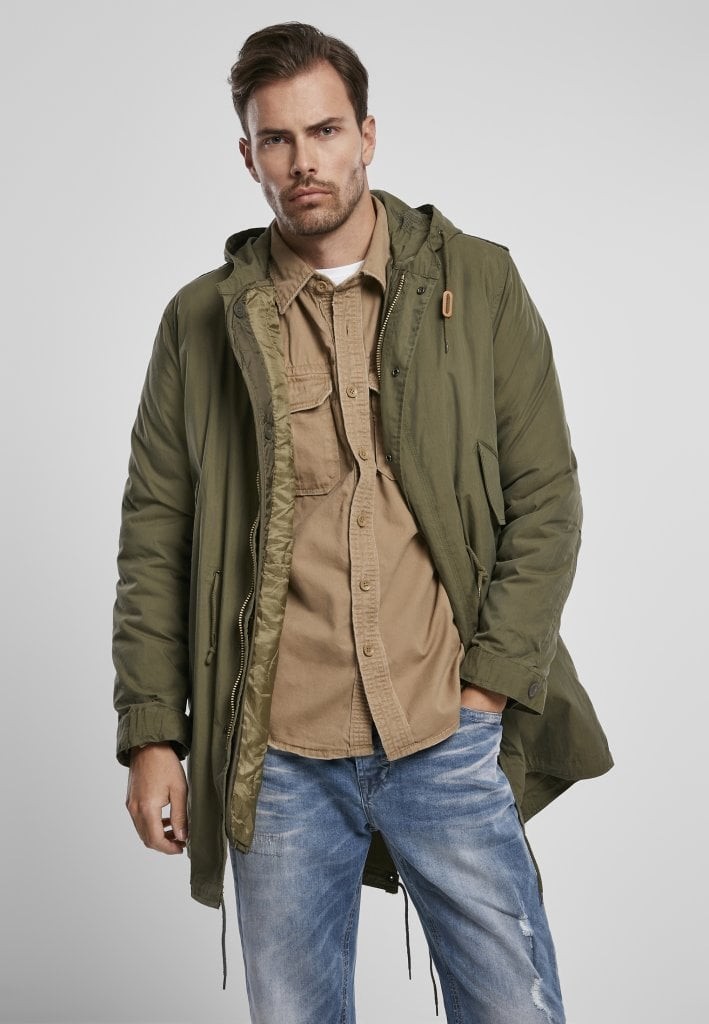
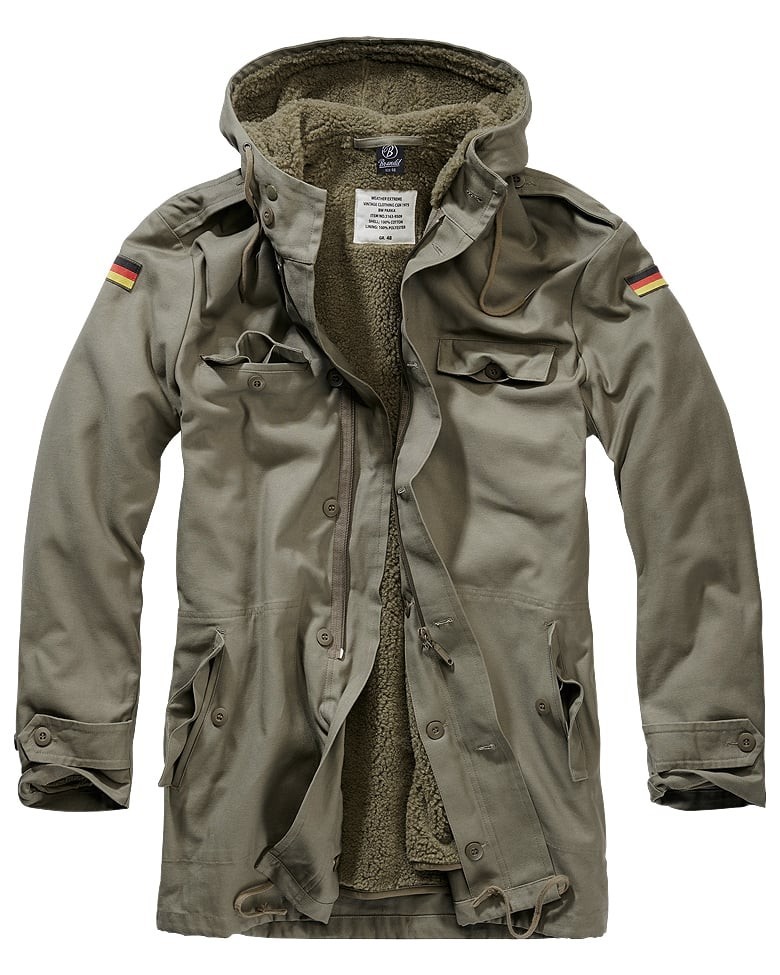
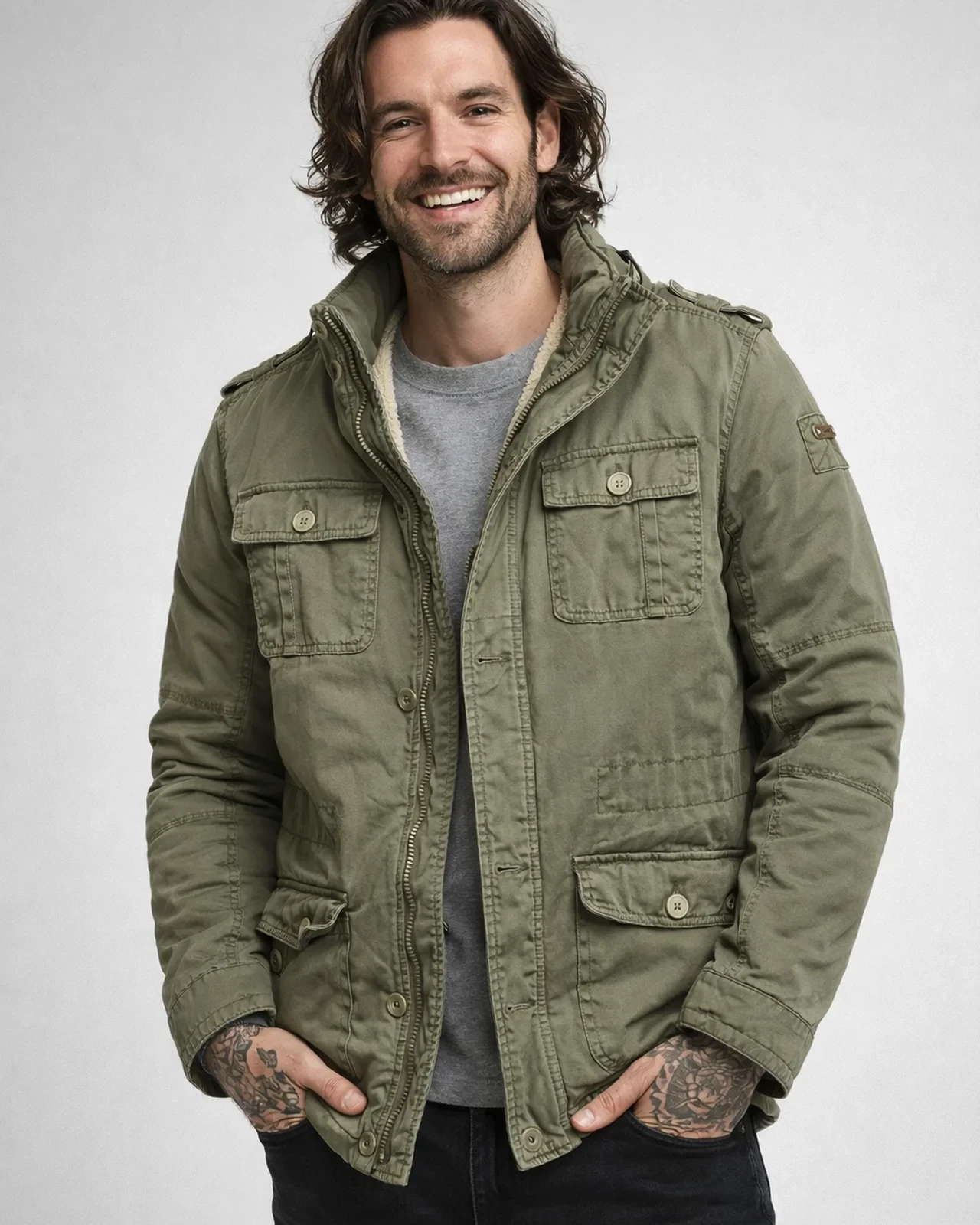
Three styles that show the difference
These styles illustrate three ways to build warmth and protection. Always check current availability and delivery time for your selected colour and size on the product page.
Which common mistakes should you avoid?
- Buying too tight and compressing insulating layers.
- Judging by the style name without checking lining and length.
- Confusing warmth with rain protection.
- Following a test without checking its activity, weather and criteria.
- Overlooking the hood, collar, cuffs and hem.
Frequently asked questions about warm men's winter jackets
Do extra layers make a winter jacket warmer?
Yes, suitable layers can add warmth by holding air between garments. They should not be so tight that the insulation is compressed or movement is restricted.
Does a warm winter jacket need a hood?
Not always, but a hood reduces heat loss around the head and neck in wind. Check that it adjusts properly and works with your usual hat or scarf.
Is a removable lining useful?
A removable lining makes the jacket more flexible across mild and cold periods. Check the fit and closure both with and without the lining in place.
Summary: how to make the right choice
Start with your activity level and time outdoors. Then choose insulation, length and wind protection before checking that the fit accommodates your normal mid-layer. A long lined parka often suits slow cold days, while a shorter style works better when mobility matters most.
Compare length, lining, hood and sizes in Dunken's current range.
View all men's winter jackets