
What is a pea coat? Fit, materials and models explained
Published: date by: author
Oddsailor guide
The names vary, but the details reveal the coat. Here is how to identify a pea coat, judge the fit and choose materials that work when the temperature drops.
What is a pea coat?
A pea coat is a relatively short, double-breasted coat with a broad collar or lapels and a clear naval background. The name is also commonly written as one word, peacoat. It describes the style, not the exact wool content or warmth of a particular garment.
If you need one for cold weather, you will find these styles among our men's winter jackets. Always check the fabric, lining and garment measurements on the product page instead of relying on the words pea coat alone.
Short answer: Pea coat and peacoat refer to the same basic style. Naval coat is a broader term and may include coats that are longer or constructed differently.
Which details define a classic pea coat?
A classic pea coat is short to hip length and usually has a double-breasted front, a broad collar, pronounced lapels and a dense outer fabric. The shape comes from naval clothing, where the collar could be turned up and the overlapping front added protection from the wind.
Modern versions vary widely in fabric and insulation. A wool blend may provide structure and warmth, while the lining and padding affect cold-weather performance. Two garments sold under the same name can therefore suit very different conditions.
What is the difference between a pea coat, peacoat and naval coat?
| Term | Usual meaning | Check |
|---|---|---|
| Pea coat | The standard two-word spelling for the short, double-breasted style | Fit and actual insulation |
| Peacoat | A common one-word spelling of the same term | Fabric, lining and length |
| Skipper jacket | An informal label that may be used for similar maritime jackets | Whether it is actually short and double-breasted |
| Naval coat | A general description of a navy-inspired coat | May include more styles than a pea coat |
To compare other silhouettes as well, browse all men's jackets.
Which material should you choose?
Wool gives a pea coat its classic dense feel and helps the fabric hold its shape, but many modern coats use wool blends. Polyester or viscose can affect durability, weight, drape and price. The percentages tell you more than the product name.
- Higher wool content: often a firmer feel and useful temperature regulation, but careful cleaning is important.
- Wool and polyester: can make a robust everyday coat with a structured finish.
- Wool and viscose: can create a softer surface and smoother drape.
- Lining and padding: affect warmth and how easily the coat slides over layers.
Never assume that a pea coat is made from pure wool. Read the outer fabric, lining and filling separately.
How should a pea coat fit?
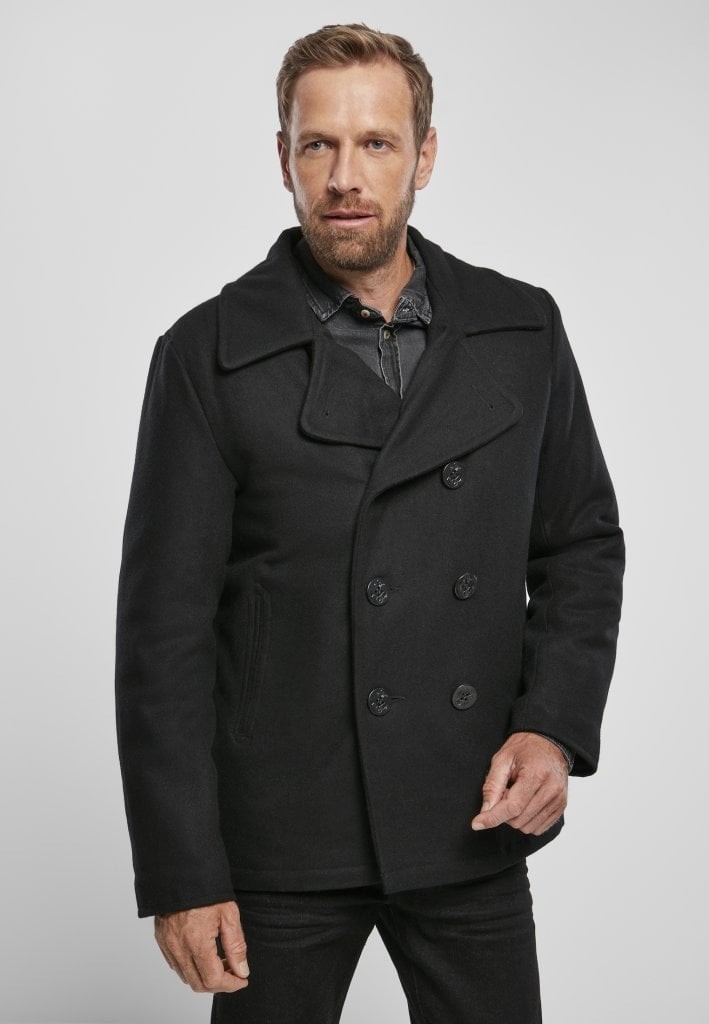
The shoulder seam should sit close to the edge of your shoulder, and the front should button without pulling. You also need enough room for the layer you will actually wear underneath. Test the fit with a jumper or hoodie if the coat is intended for winter.
- Measure the chest width of a coat that already fits you well.
- Compare garment measurements, not just the size letter.
- Check sleeve and back length with your arms relaxed.
- Button the coat and make sure you can sit and move your arms comfortably.
If you need more room through the chest or waist, compare measurements and ranges among our men's jackets in big sizes. Simply sizing up can leave you with sleeves that are too long.
Is a pea coat warm enough for winter?
That depends on the fabric, lining, wind, temperature and layers underneath. A dense wool blend with a quilted lining can work well on cold everyday outings, but the name is not a temperature rating. For long periods in severe cold, a longer or more heavily insulated winter coat may be the better choice.
A collar that turns up, dense fabric and space for a mid-layer all help in windy weather. A scarf, gloves and beanie also make a large difference to overall warmth.
Which model works for casual and smarter outfits?
A black or navy pea coat can move easily between casual and smarter looks. A clean front is simple to combine, while anchor buttons and pronounced details create a stronger maritime character.
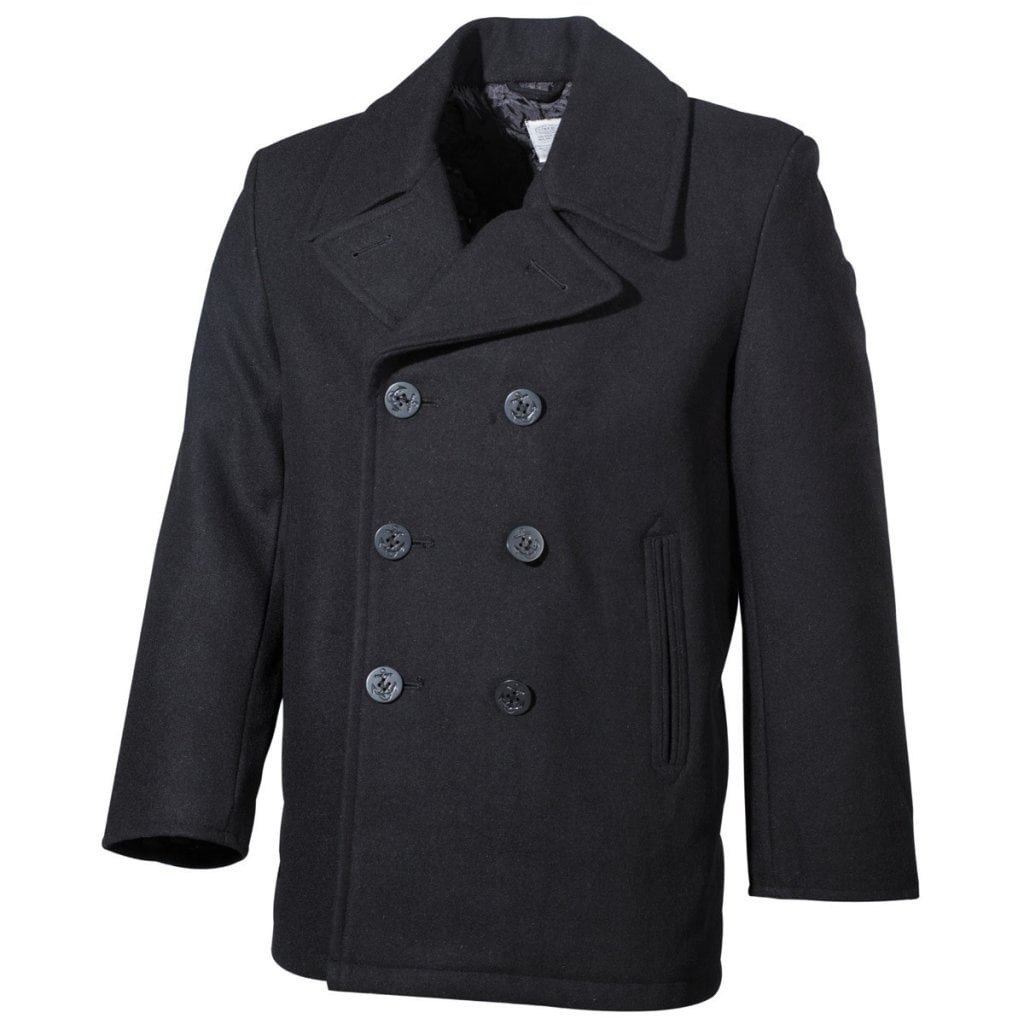
This model shows the basic shape clearly: shorter length, two button rows and a collar that can be worn open or more closed.
How do you style a peacoat without looking too formal?
For everyday wear, pair it with dark jeans, a chunky knit and boots or clean trainers. For a smarter outfit, choose a shirt, fine knitwear and straight trousers. Keeping the layers slightly shorter than the coat creates a clean outline.
A roomier cut leaves space for a hoodie, but make sure the hood and broad collar are not competing for the same space.
What should you check before buying?
- Outer fabric: check the actual wool percentage and other fibres.
- Lining: see whether the coat is lined or padded and how it should be cared for.
- Garment measurements: compare chest width, length and sleeves with your own coat.
- Layering room: choose for the jumper you plan to wear underneath.
- Weather protection: the product name does not promise windproof or waterproof performance.
- Care: always follow the individual care label.
Important: “Pea coat” describes the style, not a guaranteed fabric or winter temperature. Always check the product specifications.
Choose a pea coat that does more than sound right
Compare wool content, lining, measurements and layering room. That gives you the right coat for your everyday use.