
What is a beanie? Fit, styles and materials explained
Published: date by: author
Dunken guide
Short, long, lightweight or chunky? Here is what actually makes a hat a beanie and how to choose one that fits.
What is a beanie?
A beanie is a soft, close-fitting brimless hat, usually knitted and often finished with a folded cuff. The word mainly describes the shape, not a specific material or level of warmth. A beanie can therefore be short, long, lightweight, chunky or lined.
Start with Dunken's beanies for women and men and compare height, cuff, material and how much of the ears the model covers. That tells you more than the product name.
Are a beanie and a winter hat the same thing?
A beanie is a type of winter hat. Every beanie is a hat, but not every hat is a beanie. A balaclava also covers the neck or face, while a trapper hat may have ear flaps and a more structured build.
| Style | Key features | Best when |
|---|---|---|
| Classic beanie | Soft, knitted, often cuffed | You want an easy everyday hat |
| Fisherman beanie | Shorter crown with a defined cuff | You want a compact streetwear silhouette |
| Long beanie | Extra fabric and a relaxed drape at the back | You want a softer, more relaxed look |
How should a beanie fit?
A beanie should stay in place without pressing hard on your forehead, temples or ears. It should not creep upwards when you move your head. A cuff lets you adjust the height, but the stretch and seams should still feel even.
- Position the beanie where you want the front edge to sit.
- Check that it covers as much of your ears as you need.
- Turn your head and check for pressure around the seams.
- Take it off after a few minutes; deep marks or a headache mean it is too tight.
Short, fisherman or long beanie: which should you choose?
Choose by silhouette and ear coverage. Short beanies and fisherman styles sit closer to the crown and may leave part of the ears uncovered. Long beanies have more fabric and drape at the back. Neither shape is automatically warmer.
- Short style: a clean silhouette with less excess fabric.
- Classic style: a flexible everyday shape, often with an adjustable cuff.
- Long style: a relaxed look with extra volume at the back.
Important: “One size” does not mean a beanie fits everyone in the same way. Fabric stretch, crown height, seams and cuff all affect the fit. Check the product measurements when available and compare them with a hat you already like.
What is the best material for a beanie?
The best material depends on the weather, your activity and how sensitive you are to texture against the skin. Acrylic is common, keeps its shape and is easy to care for. Wool can insulate well, but softness varies by fibre and construction. Cotton often feels lighter and softer, although the knit still affects warmth.
Compare knitted beanies by fibre content, density and any lining. Read the care label before buying; the wrong temperature or drying method can change both shape and stretch.
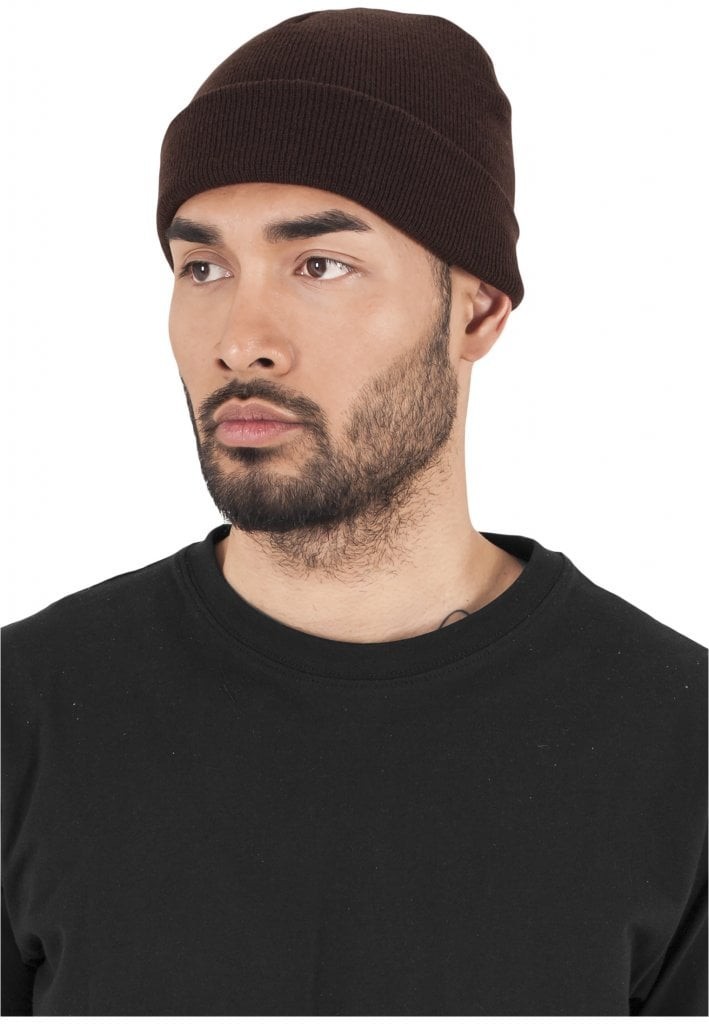
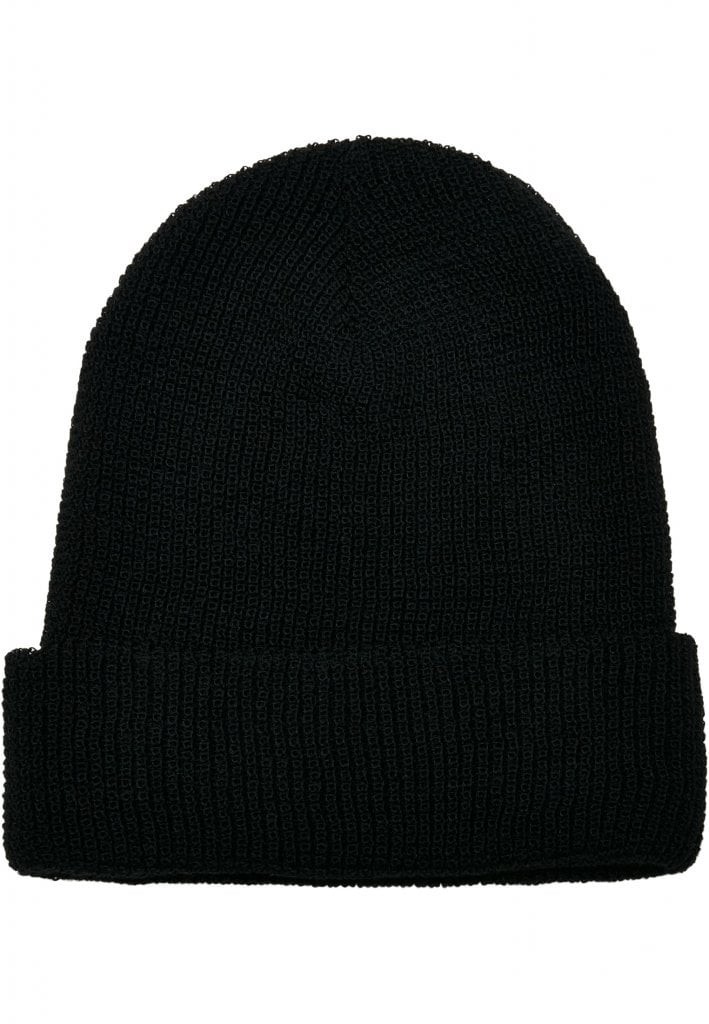
Two beanies that show the difference in texture
These styles are published and available to order at the time of checking. Both are one size, but they show different weights and knit structures.
How do you style a beanie?
Let the beanie's height work with the rest of your silhouette. A short fisherman style suits a straight jacket or overshirt. A classic cuffed beanie works easily with a hoodie, bomber or parka. A longer style adds volume and can be balanced with cleaner lines elsewhere.
- Black or dark grey: an easy base for colourful jackets and prints.
- Olive, burgundy or navy: a muted contrast with black streetwear.
- Orange or a bright colour: a clear accent; keep the rest quieter.
Which common mistakes should you avoid?
- Assuming all beanies are equally warm.
- Choosing a short style when you need full ear coverage.
- Buying “one size” without checking height, stretch or measurements.
- Washing knitwear hotter or harder than the care label allows.
- Pulling the beanie down so hard that the cuff and crown lose their shape.
In short: beanie describes the shape. Material, knit, height and fit determine how it actually performs.
Find a beanie that fits
Compare short, long, lightweight and knitted styles by the fit and ear coverage you actually want.